Queue Management Systems in 2026: A Practical Guide for Modern Service Businesses
Waiting in line quietly kills customer loyalty. A modern queue management system turns that chaotic wait into a calm, measurable, and even pleasant experience. In 2026, banks, clinics, telecom stores, and government service centers across the Gulf and South Asia are replacing paper tickets with connected digital queuing that talks to signage, mobile apps, and analytics dashboards.
This guide explains how these systems work, what to look for, and how the right deployment lifts both throughput and satisfaction. Whether you run a single branch or a national network, the fundamentals below will help you choose wisely.
What Is a Queue Management System?
A queue management system (QMS) is the hardware and software that organizes how customers wait and get served. At its core it issues a ticket, routes each visitor to the right counter, and records how long every step takes.
Older setups relied on a simple “take-a-number” dispenser. Today’s platforms are cloud-connected, multi-branch, and data-rich. They combine self-service kiosks, digital signage, staff terminals, and reporting into one loop.
Core Components
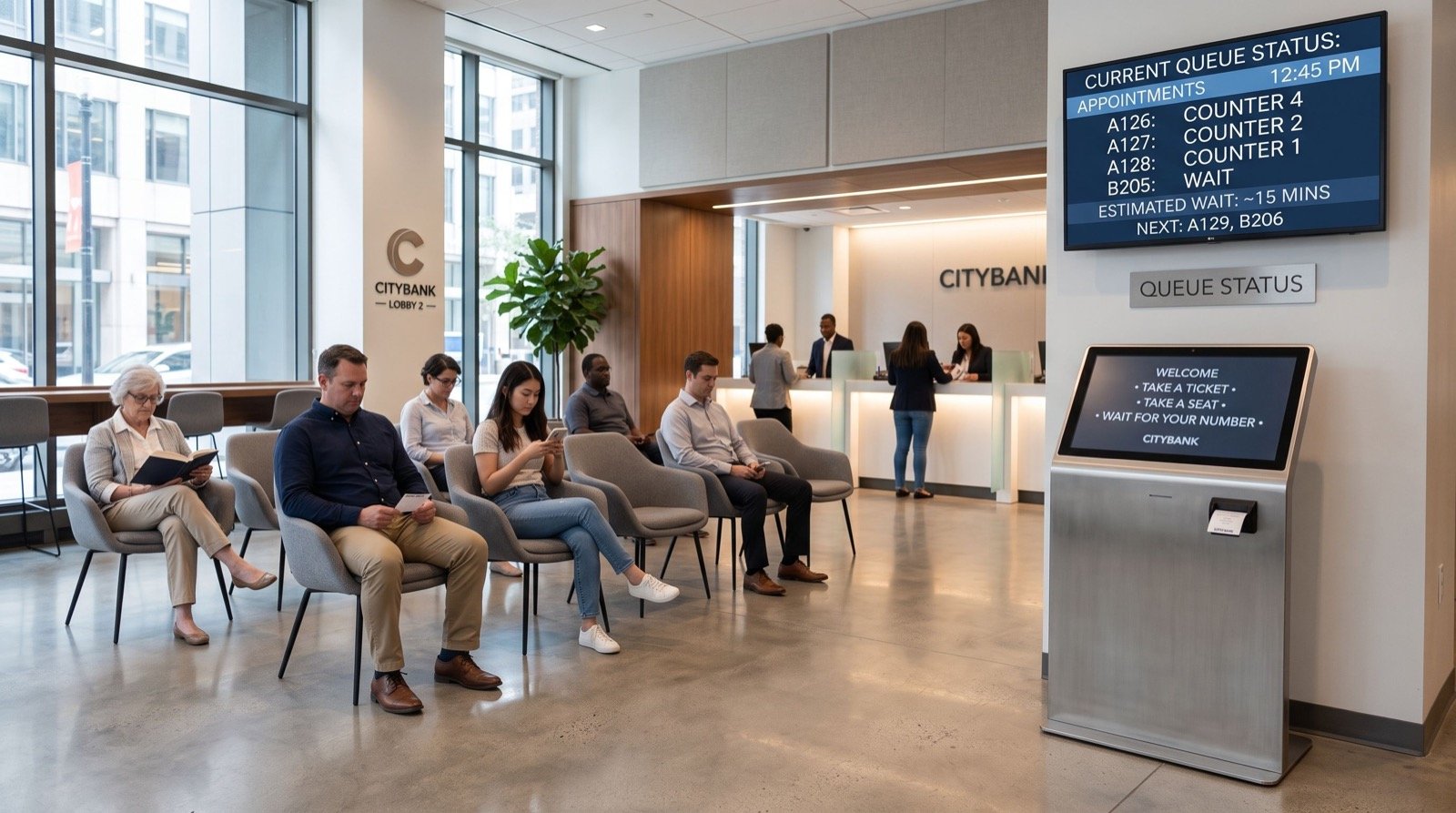
- Ticketing kiosk or mobile check-in: visitors select a service and receive a number.
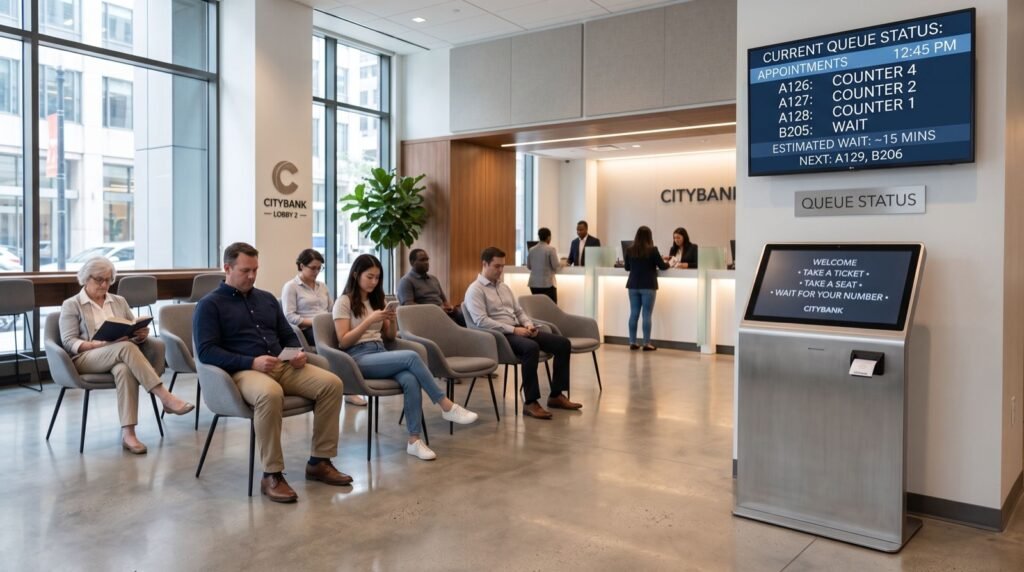
- Digital signage & audio calling: screens announce who is next and where to go.
- Staff dashboard: agents call, transfer, or recall customers with one click.
- Analytics engine: tracks wait time, service time, and no-show rates in real time.
Why Queue Management Matters More in 2026
Customer patience keeps shrinking. Industry research consistently shows that a large share of visitors abandon a queue when the wait feels unmanaged, and many will not return. A structured system removes that uncertainty by showing progress and setting expectations.
There is also a staffing angle. When managers see live data, they open extra counters before a bottleneck forms rather than after complaints pile up. That single behavioral shift often pays for the whole system.
Regional demand is strong. Businesses looking for a queue management system in saudi arabia increasingly want Arabic-English bilingual interfaces, Vision 2030-aligned digital service standards, and integration with national identity platforms. The maturity of these deployments has raised the bar for everyone.
The Numbers Behind the Wait
Consider a mid-size branch serving 400 visitors a day. Trimming average wait by just four minutes returns over 26 hours of collective customer time daily. Multiply that across a network and the goodwill compounds fast.
How Do You Choose the Right Queue Management System?
Start with your service model, not the feature list. A pharmacy with fast, uniform transactions needs different logic than a bank handling loans, deposits, and account openings at the same time.
Ask these questions before you commit:
- Does it support both walk-in and appointment (virtual) queuing?
- Can it scale from one branch to many without re-architecting?
- Does reporting expose service-level breaches automatically?
- How well does it integrate with your CRM, ERP, or telecom stack?
Providers serving fast-growing markets have refined these answers. Teams evaluating a queue management system in pakistan often prioritize mobile-first check-in and SMS notifications, because customers there expect updates on their phones rather than a physical screen alone.
Comparing Deployment Types
The table below summarizes the three common approaches so you can match one to your operation.
| Type | Best For | Key Strength | Watch-out |
|---|---|---|---|
| On-premise | Single site, strict data rules | Full local control | Manual scaling & updates |
| Cloud (SaaS) | Multi-branch networks | Central dashboards, easy rollout | Needs reliable connectivity |
| Virtual / mobile | High-footfall retail & clinics | Wait from anywhere | Requires customer app adoption |
Integrating Queue Management With Your Wider Tech Stack
The biggest gains appear when queuing stops being an island. Connect it to your telephony, digital signage, and customer database and you unlock true orchestration.
For example, a returning customer identified at check-in can be routed straight to a specialist agent. A telecom retailer can trigger an upsell offer on the signage screen while the customer waits. These small touches turn dead time into engagement.
Reliable networking underpins all of it. Sound cabling, stable Wi-Fi, and resilient infrastructure keep kiosks and screens synchronized, which is exactly the kind of groundwork that separates dependable specialists from bargain installers who leave you troubleshooting later.
Security and Compliance
Because these systems handle visitor data, follow recognized security guidance. The U.S. National Institute of Standards and Technology offers a widely adopted framework worth reviewing during procurement — see the NIST Cybersecurity Framework for baseline controls around access, encryption, and incident response.
Measuring Success After Go-Live
A system is only as good as the decisions it drives. Track a small, honest set of metrics and review them weekly.
- Average wait time versus your service-level target.
- Service time per counter to spot training gaps.
- Abandonment rate to catch understaffing early.
- Peak-hour heat maps to plan shifts intelligently.
One practical tip from the field: publish a live “estimated wait” figure to customers even if it is approximate. Perceived fairness matters more than raw speed, and visible progress dramatically reduces complaints.
Frequently Asked Questions
How much does a queue management system cost?
Costs vary by scale and model. A single-kiosk on-premise setup can start modestly, while a multi-branch cloud platform is usually priced per branch or per counter monthly. Factor in signage, installation, and support when comparing quotes.
Can a queue management system work without customer apps?
Yes. Kiosks, SMS notifications, and web check-in all work without a dedicated app. Apps add convenience but are optional, which keeps the experience accessible to every visitor.
How long does deployment take?
A single branch can go live within days once hardware arrives. Larger networks typically roll out in phases over a few weeks, starting with a pilot site to fine-tune routing rules before scaling.
Does queuing software integrate with existing systems?
Modern platforms expose APIs for CRM, ERP, telephony, and identity systems. Confirm integration support during evaluation so you avoid manual data re-entry after launch.
Conclusion
A well-chosen queue management system in 2026 does far more than issue tickets. It shortens waits, exposes bottlenecks, and turns everyday branch traffic into actionable data. Start with your service model, insist on strong integration and security, and measure relentlessly after go-live. Ready to modernize your front desk? Talk to an experienced provider and pilot a single branch before you scale across your network.